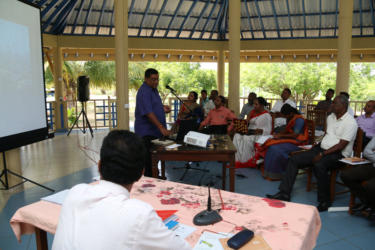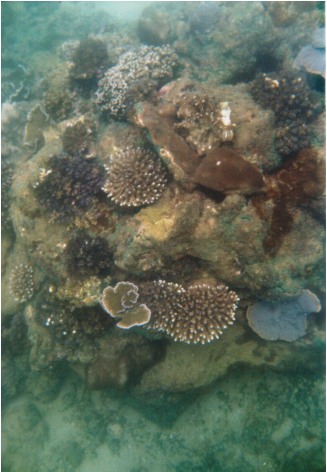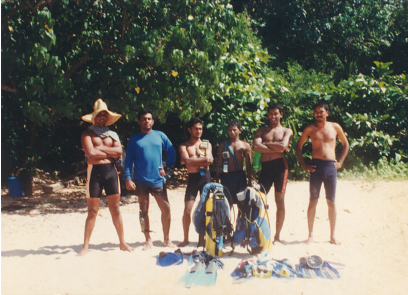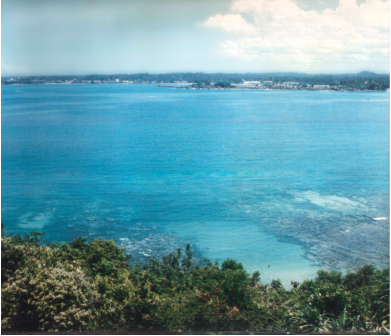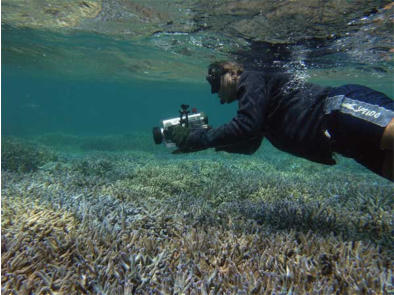

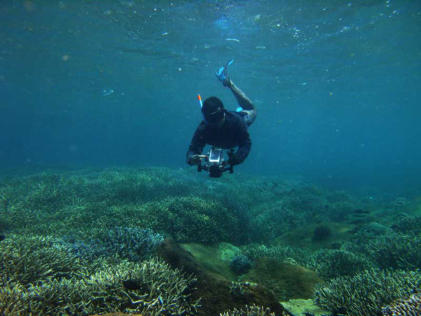
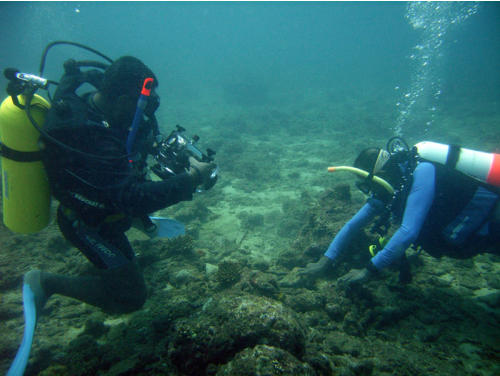
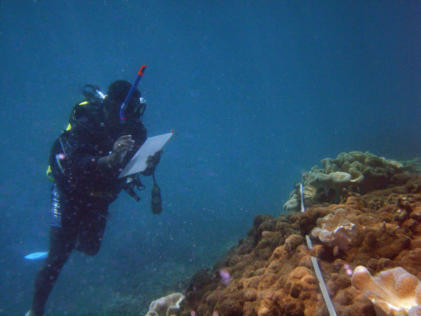
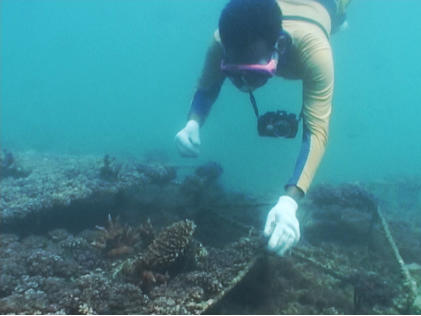
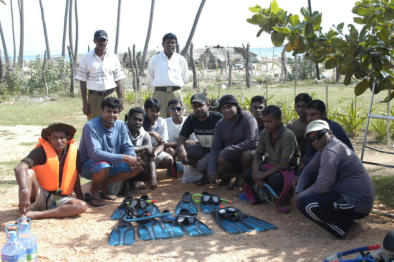
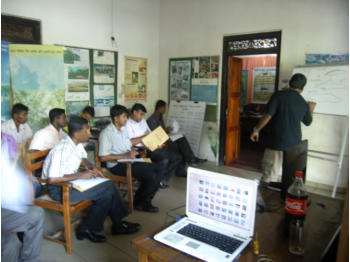
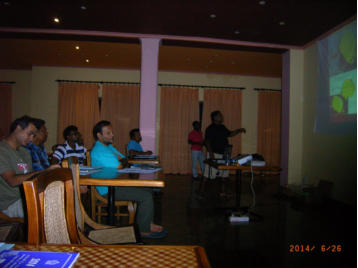
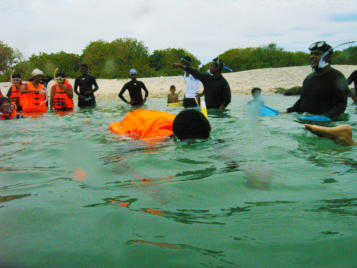
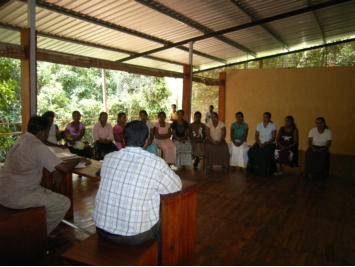
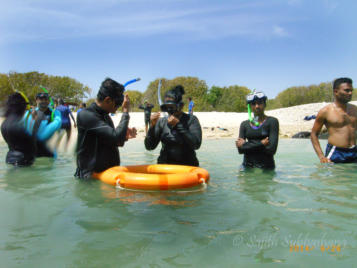
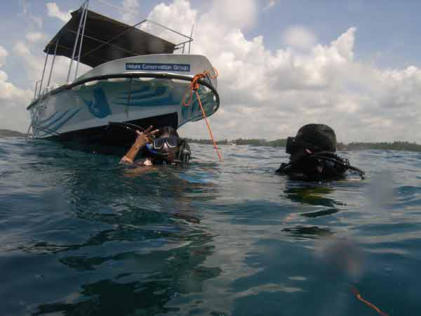
Training DWLC, Hikkaduwa Marine Park staff in Marine biology, coral reef ecology, species identification
and diving skill development at Hikkaduwa, Pigeon Islands and Kalpitiya Bar-reef Marine Parks.
Training Sri Lanka Customs Biodiversity unit in Marine environmental management issues and identification of Marine
protected fauna.
Annual field training for Jayawardanapura university- biology students in Marine Ecology, Identification and Management
issues by Natcog/ORCA teams.
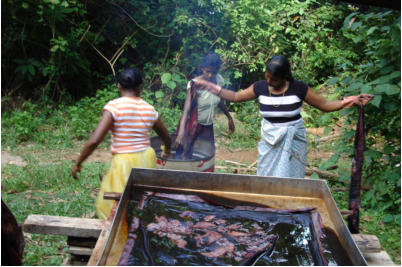
Community training and livelihood development activities at Rumassala.
Training Awareness and community development work

Nature Conservation Group







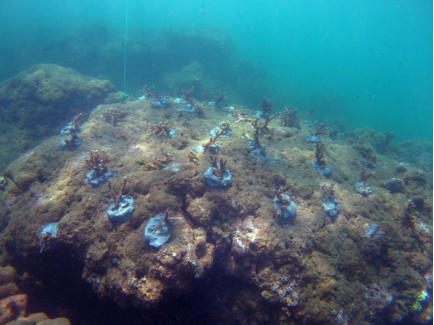
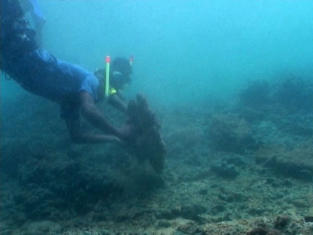
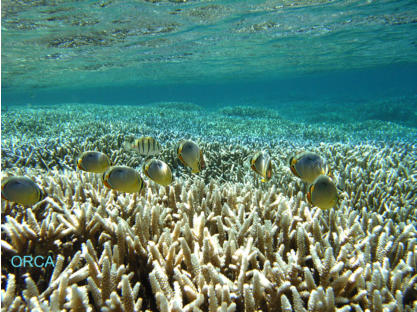
Maintenance of Coral nurseries
Newly replanted corals
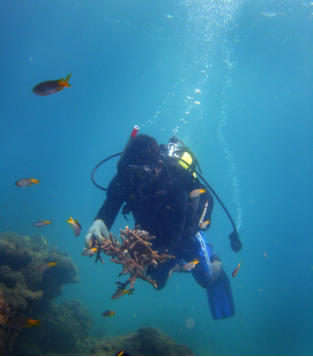
Rescuing broken
coral fragments to
be used for
replanting reef
areas.
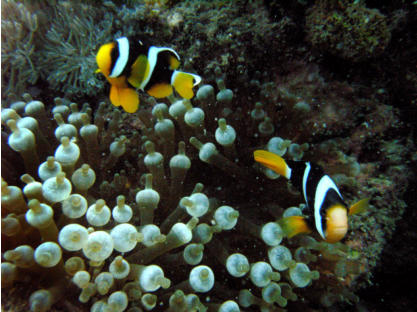
The Group have been involved in
promoting sustainable Management of the
Ornamental Aquarium trade and the
extraction of reef fauna for export food
fishery. Through surveys of extraction
pressure and direct and indirect impact of
marine ecosystems. campaigning to
expand legal framework and policy and
providing training and assistance in
detections for Enforcement agencies
including Sri Lanka Customs Bio-diversity
unit and DWLC staff.
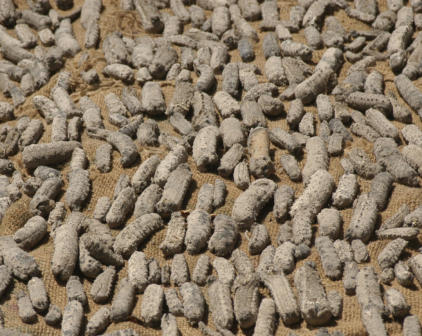
Promoting Sustainable Management of the Ornamental Aquarium and food fish
Marine Export Trade
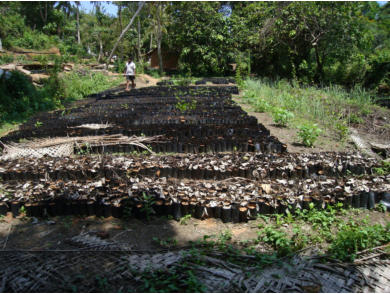
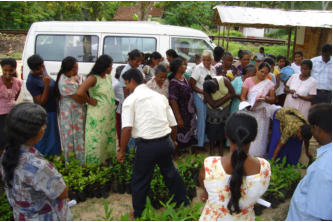
Maintenance of Plant nurseries and post Tsunami
coastal vegetation rehabilitation Program in
Association with Neo-synthesis Research Centre
(NSRC)
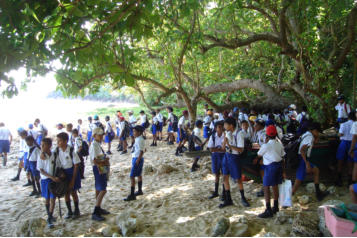
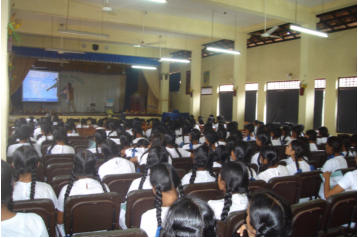
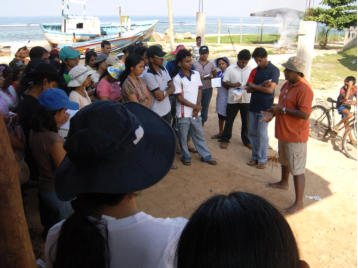
School awareness programs and beach cleaning activities

Rumassala Project
The ORCA/Natcog teams’ involvement with the Rumassala
coral reef go back to the early 1990’s when the Natcog
teams conducted a 3-year intense survey of the coral reef
at Buona-vista, Rumassala (now better known as Jungle
beach.) to study the status and Biodiversity of the reef. the
report published in 1994 and updated in 1996 recorded
over 480 species of fish, about 300 species of reef
invertebrate species and a live coral cover of over 70%.
The survey findings became the core of the campaign to
save the reef from the from the proposed Galle Harbor
development project.
ORCA has continued its long term involvement with the
Rumassala through regular monitoring activities and is
presently engaged in a experimental reef restoration
activity using Reef Domes to enhance lost substrate and
coral replanting as a joint Activity with Tokyo Cement
Group. This program is the longest continuous running
coral reef restoration initiative in Sri Lanka.
The Rumassala reef report (1996) is available for free download in the
publication section of this website.
Rumassala Coral reef long term monitoring and
experimental restoration activities
Natcog the sister organisation of ORCA initiated surveys
and coral reef restoration activities at Rumassala reef in
1996. The program in now implemented by ORCA and is
the longest running reef monitoring and restoration
program in Sri Lanka.
The initial surveys were published as a report that was
used as the basis for campaigning spearheaded by
Natcog for the protection of the reef from the propesed
Galle harbor development project which threatened to
destroy the complete reef.
Currently ORCA is engaged in restoration of the reef
using substrate enrichment using reef domes and coral
replanting and translocation of lost keystone species
back to the reef.
The program was initially self funded and was later
supported by UNDP/SGP program and is currently
engaged in a program in partnership with TOKYO
cement group.
The report of the Buona=vista/Rumassala coral reef survey 1995
is available for download in the publications section of this site.
kayankerny reef survey and proposal
for upgrade in to a marine protected
area.
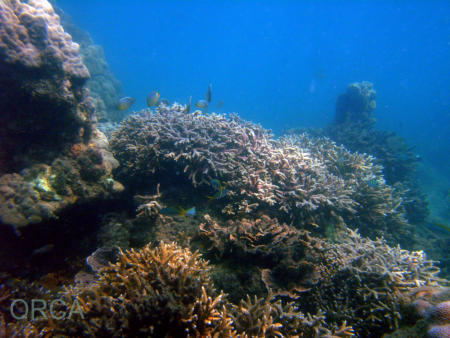
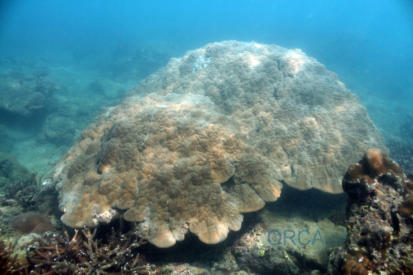
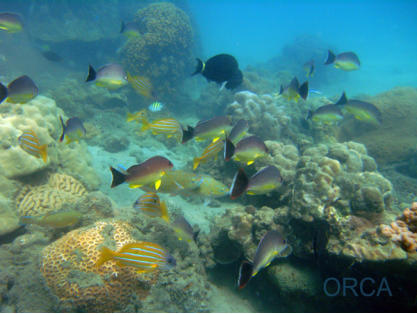
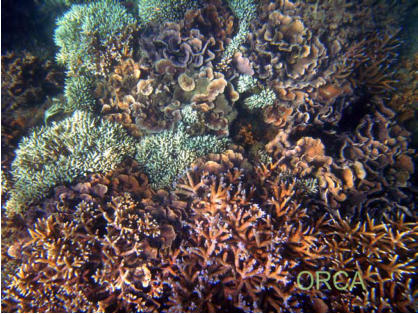
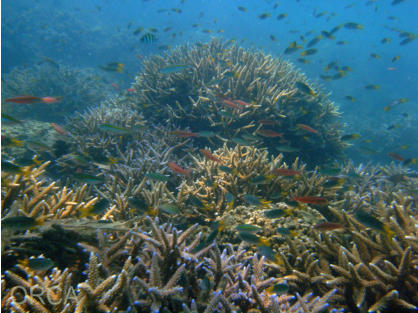
A survey of several coral areas in the east coast
was undertaken in partnership with Dilmah
conservation a CSR activity of Dilmah tea…. The
surveys focused on the then relatively un-known
but vibrant coral reefs of Kayankerny close to
Pasikuda in the South Eastern coast of Sri Lanka.
Dilmah Conservation and ORCA reports and
campaigning was pivotal in getting the area
declared as a marine protected area under the
jurisdiction of the Department of Wildlife
conservation Sri Lanka
ORCA Projects and Activities
ORCA’s is i have been Involved in Survey, Conservation,
Training and the Management and of Coral reefs, Seagrass,
Marine Mammals, Reef Invasive species, Coastal
development , export orientated reef species fisheries, and
Marine protected area and species.
Restoration of degraded Coral environments.
The coastal coral reefs of Sri Lanka suffered a series
of catastrophic natural coral mortality events during
the last 3 decades ranging from a series of Coral
Bleaching events, Storms, Tsunami and Infestations
of invasive reef organisms.
Currently most coastal coral reefs in Sri Lanka are in
a highly degraded state with low natural recovery
potential. Reefs have lost most of their live coral
cover, Reef structure, Bio-diversity and Ecological
functions.
The Coral restoration experiments of the group were
initiated in 1996 and became a core activity of the
group post to the 1998 Coral Mass mortality event.
The group were the pioneers in Coral reef restoration
in Sri Lanka ORCA has been involved in reef
restoration activities in Kalpitiya Bar-reef, Pasikuda,
Hikkaduwa MNP and Rumassala Marine Sanctuary.
Further information of techniques used by ORCA/Natcog is
available in the free publication REEF HELP GUIDE available for
download in the publications section of this site.
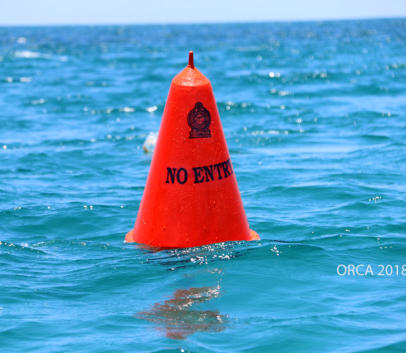
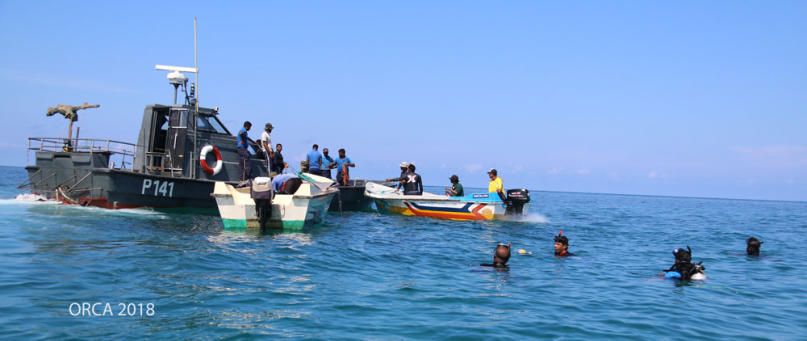
The Bar- Reef “Left Aside for Restoration
Zone” Site selection and deployment of
Marker Buoys
The Bar-reef which had recovered from the 1998
Coral bleaching event was caused catastrophic coral
mortality due to the coral bleaching event of 2016. An
activity was undertaken jointly with ORCA, ESA
project of UNDP, DWC, local communities and
Authorities. To Identify and demarcate a “Left aside
for restoration zone” on the Bar-reef to allow the reef
to recover with reduced human impacts as before.
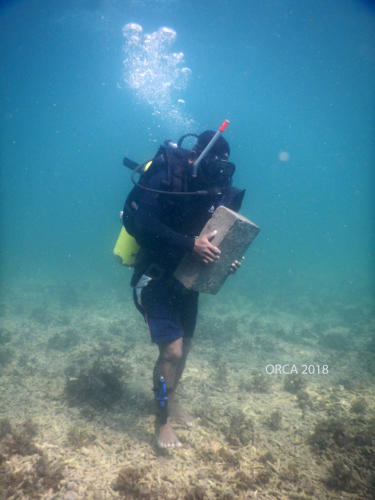
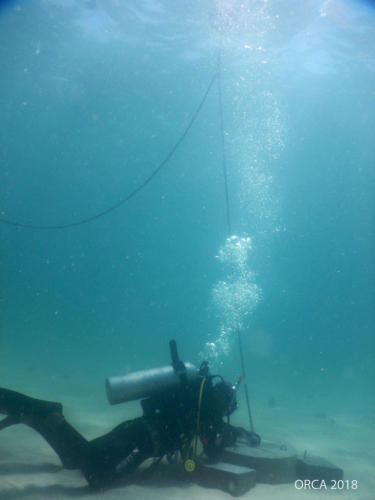
ORCA carried out surveys, Site Selection and
Demarcation with specially designed Marker buoys
and engaged in Habitat enrichment using Artificial
Reef Structures at the site.
The project was carried out in Partnership with ESA
project UNDP/ DWLC 2015-1018